🔥 JANMASHTAMI FASTING: ARE YOU ACTUALLY FASTING OR EATING MORE?
How to turn a religious fast into an opportunity to improve blood sugar, support weight control, protect heart health, and promote healthy aging
By Dr. Kamales Kumar Saha, MBBS, MS, DNB, MCh (AIIMS), MD (USA)
Preventive Cardiologist, Cardiac Surgeon (7,000+ Surgeries) & IICA-Certified Independent Director
Millions of Indians will observe Janmashtami with prayer, devotion and fasting. For many, fasting means avoiding wheat, rice and certain other foods while eating specially prepared vrat or faraal foods.
But there is a question worth asking:
Are you actually fasting, or have you simply replaced your regular meals with calorie-dense festival foods?
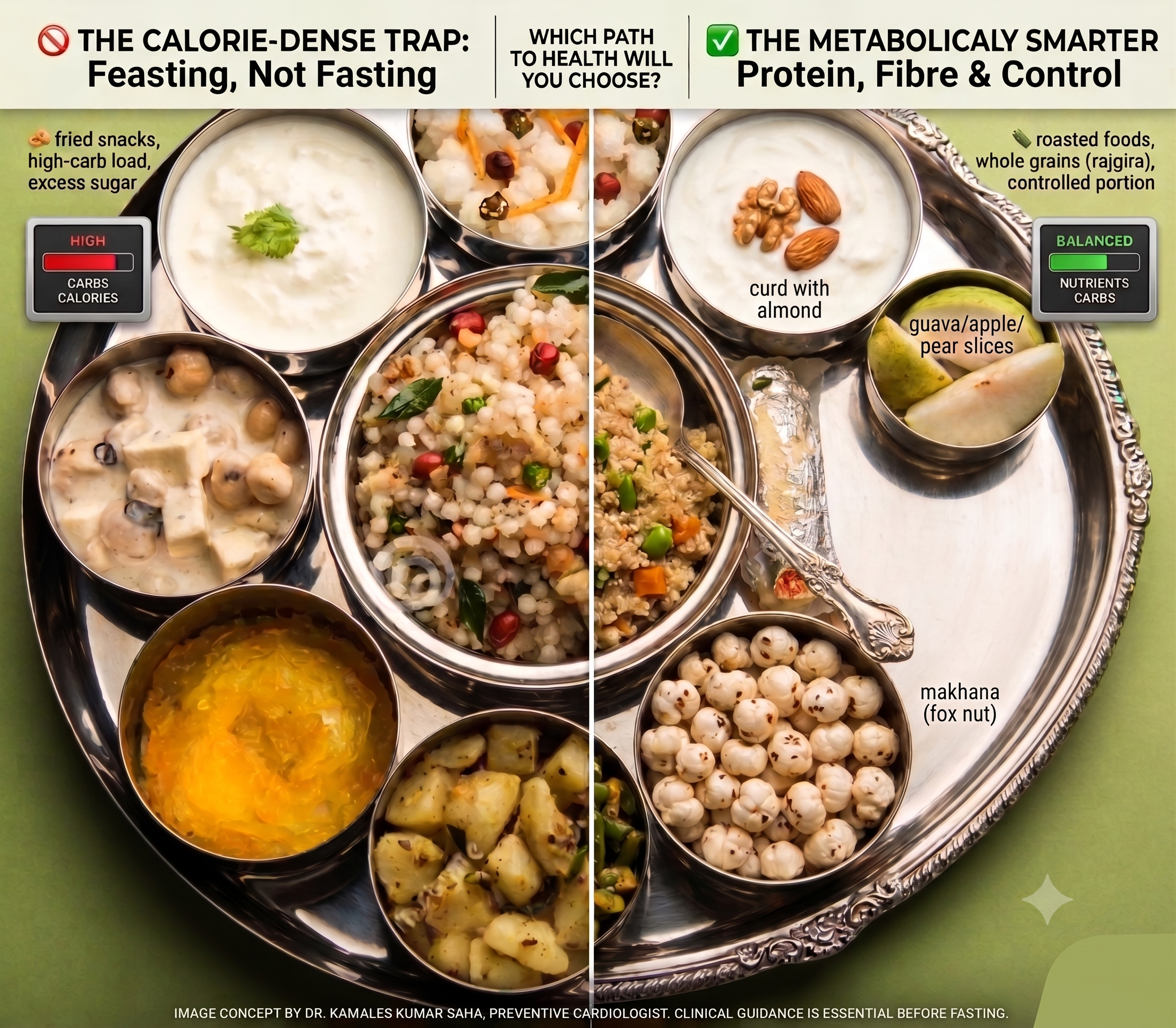
A day without wheat or rice is not automatically a low-calorie day. Large portions of sabudana, potatoes, fried snacks, sweets and sweetened drinks can turn a religious fast into a calorie surplus. For someone with prediabetes, Type 2 diabetes, insulin resistance or excess weight, what you eat during the fast may matter as much as the fact that you are fasting.
The positive news is that Janmashtami fasting can become an opportunity for better metabolic health.
The goal is not to abandon tradition. It is to combine the discipline of fasting with better food choices, sensible portions, adequate hydration and, where necessary, appropriate medical planning.
After 35 years of treating cardiovascular disease, I have learned a simple lesson: preventing metabolic damage is far better than treating its consequences years later.
The Janmashtami Fasting Paradox: Less Food or Different Food?
Traditional fasting can encourage discipline and reduce eating occasions. Modern festival eating can sometimes reverse that benefit.
Sabudana is predominantly starch. Potatoes are carbohydrate-rich. When these foods are repeatedly deep-fried or combined with sweets and sweetened beverages, the total carbohydrate and calorie load can become substantial.
This does not mean that traditional faraal foods are inherently unhealthy.
A fasting food is not automatically a healthy food.
The important factors are portion size, preparation method, total carbohydrate intake, added sugar and the overall nutritional balance of the day.
This matters particularly for South Asians, who can develop insulin resistance and Type 2 diabetes at lower levels of body weight than many Western populations. Visceral fat, the fat stored around internal organs, is an important part of this metabolic risk.
So instead of asking only:
“Is this food allowed during my fast?”
also ask:
“Is this helping my metabolic health?”
THE JANMASHTAMI FASTING TEST
Before eating, ask yourself five questions:
1. How much am I eating?
Portion size still matters, even during a religious fast.
2. How is it prepared?
Boiled, roasted or lightly cooked foods can be very different from heavily fried versions.
3. What is the carbohydrate load?
Sabudana, potatoes and sweets can add up quickly.
4. Am I drinking enough water?
If fluids are permitted by your fasting practice, maintain adequate hydration.
5. Do I have diabetes or take glucose-lowering medication?
If yes, fasting may require medical planning and glucose monitoring.
Can Fasting Support Metabolic Health and Healthy Aging?
Fasting and calorie restriction are being studied extensively for their effects on body weight, glucose regulation and metabolic health. Recent evidence suggests that intermittent fasting can help with weight and some cardiometabolic outcomes, although its benefits are not necessarily greater than other effective approaches to reducing energy intake.
During a period without food, the body gradually shifts from relying primarily on recently consumed glucose toward using stored energy, including fat. The extent of this shift depends on the duration of the fast, the individual's metabolism and what was eaten beforehand.
Fasting also influences cellular pathways involved in energy sensing and maintenance. Autophagy, a process in which cells break down and recycle damaged or unnecessary components, is one mechanism of particular scientific interest. Evidence strongly supports fasting and calorie restriction as stimulators of autophagy in experimental settings, but the timing and clinical significance of these effects in humans remain less certain.
Therefore, I would not tell a patient that one day of Janmashtami fasting will “slow aging.”
The more defensible message is this:
Repeated control of calorie intake, body weight, blood glucose and metabolic risk factors can contribute to healthier aging.
Janmashtami can be one opportunity to practise those habits.
How to Turn Your Fast Into a Health Opportunity
1. Build the fast around real food
Where permitted by your religious practice, choose foods that provide protein, fibre and micronutrients rather than relying mainly on fried snacks and sweets.
Practical choices may include:
- Plain unsweetened curd or yogurt
- Nuts in controlled portions
- Dry-roasted makhana
- Vegetables permitted within your fasting tradition
- Whole fruit in sensible portions
- Rajgira or kuttu prepared with minimal added fat
- Home-prepared foods instead of packaged fasting snacks
The objective is not to eliminate carbohydrates completely.
It is to improve food quality and control total intake.
2. Treat fried faraal foods as occasional foods
Sabudana vada, fried potato preparations and similar foods can be part of a celebration without becoming the foundation of every meal.
Prefer roasted, boiled or lightly cooked preparations where appropriate.
Traditional does not have to mean unlimited.
3. Watch the hidden sugar
A common mistake is replacing food with sweetened drinks, fruit juices or large quantities of festival sweets.
Whole fruit is generally preferable to fruit juice because the intact fruit retains its fibre and requires chewing.
If you are fasting for metabolic health, do not compensate for hours without food by consuming a large sugar load when you break the fast.
4. Hydrate intelligently
If your religious practice permits fluids, drink adequate water throughout the permitted period.
Hydration becomes particularly important for people with diabetes because fasting can increase the risk of dehydration in some circumstances.
5. If you have diabetes, do not change medication on your own
This is the most important medical precaution.
People taking insulin or sulfonylureas have a higher risk of hypoglycemia during fasting. Depending on the medication, fasting duration and individual health status, treatment timing or dosage may need adjustment.
Current diabetes standards recommend assessing fasting risk in advance and individualizing medication, food and glucose-monitoring plans.
Never stop or reduce diabetes medication simply because you are fasting unless your treating clinician has advised you to do so.
People with recurrent hypoglycemia, poorly controlled diabetes, significant kidney disease, pregnancy, frailty or other important medical conditions may require particular caution.
What Should You Do When You Break the Fast?
The end of the fast should not become the beginning of a feast.
Instead of immediately consuming a large quantity of sweets, fried foods or sugary drinks, eat slowly and choose a balanced meal in an appropriate portion.
Where permitted, combine an appropriate protein source with vegetables or other whole foods and a controlled amount of carbohydrate.
You do not need to “reward” yourself for fasting.
The goal is to complete the fast without turning the first meal into a calorie binge.
| Metric | Calorie-Dense Festival Eating | Metabolically Smarter Fasting |
| Main focus | Frequent eating and large portions | Mindful portions and fewer eating occasions |
| Carbohydrates | Large amounts of sabudana, potatoes and sweets | Controlled portions and nutrient-dense choices |
| Preparation | Frequent deep-frying | More roasting, boiling or light cooking |
| Added sugar | Sweets and sweetened drinks | Minimized |
| Protein & fibre | Often overlooked | Intentionally included where permitted |
| Hydration | Inadequate or sugar-rich fluids | Adequate water when permitted |
| Metabolic goal | Avoiding certain foods by tradition | Combining tradition with better food choices |
| Long-term value | May add unnecessary calories | Can reinforce healthier eating habits |
Turn Janmashtami Into a Health Opportunity
Fasting does not need to be an all-or-nothing exercise.
The most useful fast is one that respects your faith while also respecting your physiology.
For a healthy person, Janmashtami can be an opportunity to practise mindful eating, reduce unnecessary snacking and become more conscious of portion sizes.
For someone with prediabetes, Type 2 diabetes, excess weight, high cholesterol or cardiovascular risk, the approach should be individualized.
Your metabolic health is determined by what you do repeatedly, not by what you eat on one festival day. But one day can still be a powerful reminder that discipline in eating is not about deprivation. It is about making better choices consistently.
Unsure of Your True Metabolic Risk?
If you have prediabetes, Type 2 diabetes, excess weight, high cholesterol or a family history of premature heart disease, your fasting strategy should be based on your metabolic health, not simply on which foods are permitted.
A personalized assessment can help evaluate your glucose control, cardiovascular risk, weight-management priorities and the safest approach to fasting and nutrition.
To discuss a clinically tailored metabolic-health strategy, consult Dr. Saha through diabetesandobesityclinic.com.
Medical note: Religious fasting is not appropriate or equally safe for everyone. People with diabetes or significant medical conditions should discuss fasting, medication, hydration and glucose monitoring with their healthcare professional before fasting.
Medical note: Religious fasting is not appropriate or equally safe for everyone. People with diabetes or significant medical conditions should discuss fasting, medication, hydration and glucose monitoring with their healthcare professional before fasting.
If you would like a personalized metabolic and cardiovascular risk assessment, you are welcome to schedule an in-person or online consultation at Diabetes & Obesity Clinic or HeartClinic.
Medical Disclaimer
This content is for educational purposes only and is not a substitute for professional medical advice. Individuals with existing medical conditions or high cardiovascular risk should consult their healthcare provider before making changes to their treatment plan.
Article Author
Dr. Kamales Kumar Saha
Clinician–Leader · Cardiac Surgeon · Preventive Cardiologist · IICA-Certified Independent Director
Author: “Heart Attack Before 50”: “হার্ট অ্যাটাক ৫০-এর আগেই”
Dr. Kamales Kumar Saha combines over three decades of surgical expertise with a focused mission on preventing premature cardiovascular disease through targeted metabolic care.
Copyright Notice
© 2026 Dr. Kamales Kumar Saha. All rights reserved.
No part of this blog may be reproduced, stored, or transmitted in any form without prior written permission of the author, except for brief quotations used in reviews or scholarly references.